
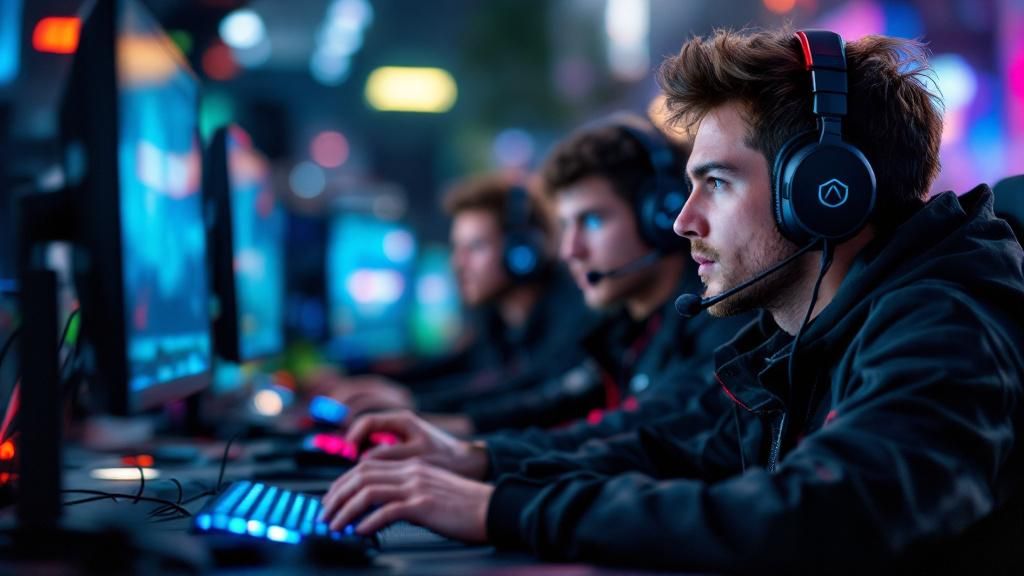
The professional esports landscape has experienced a significant transformation, with elite organisations now investing substantial resources into cutting-edge esports equipment and hardware. From high-refresh-rate monitors to high-performance mice and precision keyboards, these technological investments have become essential for tournament performance. This article explores how elite esports organisations justify spending for high-end equipment, examines the particular gear delivering competitive edges, and assesses whether superior gear actually converts into tournament victories or merely reflects the industry’s escalating level of professionalism.
The Development of Professional Esports Equipment
The progression of esports hardware innovation has been fundamentally connected with the growth of professional esports. What started as basic equipment utilised by dedicated players has transformed into sophisticated, purpose-built equipment crafted to millisecond precision. Industry leaders now dedicate substantial R&D investment to understanding the biomechanics of competitive gaming, producing equipment tailored to professional competitions. This hardware evolution represents more than modest upgrades, but a major transformation in industry perspectives on the connection between gear specifications and competitive performance.
Contemporary professional esports teams consider hardware investment as fundamental requirement rather than discretionary expenditure. The competitive landscape necessitates equipment designed to ensure steady, dependable results under high-stakes conditions, with players needing tools that minimise latency and maximise responsiveness. As tournaments grow increasingly competitive and prize pools grow substantially, organisations understand that incremental improvements in equipment quality can translate into considerable edge. This recognition has triggered a positive feedback loop wherein manufacturers keep advancing technology, teams refresh their gear, and performance benchmarks escalate accordingly.
Key Equipment to support Competitive Gamers
Professional esports teams recognise that superior peripherals serve as the foundation of elite performance. Each item, precisely selected and adapted, significantly impacts competitive consistency. Top organisations invest thousands of pounds annually in peripherals, appreciating that marginal gains in speed, comfort, and accuracy result in meaningful competitive edges. Players dedicate extensive time training with their equipment, making familiarity and quality paramount. This expenditure demonstrates sector development and the established link between hardware quality and competitive outcomes.
Mouse and Keyboard Equipment
Gaming mice serve as essential purchases for professional players, with teams typically purchasing several mice per competitor. High-end models offer adjustable sensitivity controls, programmable buttons, and highly sensitive detection systems with millisecond-grade responsiveness. Competition-standard devices employ sophisticated motion detection to minimise delays and guarantee stable on-screen tracking across different game types. Teams conduct extensive testing to identify models aligned with competitor requirements. Brands like Logitech, Razer, and SteelSeries command the esports market, with leading professionals often securing endorsement agreements and priority gear allocation.
Mechanical keyboards have become increasingly crucial components, delivering exceptional tactile feedback and durability versus standard alternatives. Competitive gamers favour switches offering optimal actuation force and response times, generally spanning 45 to 60 grams. Programmable RGB lighting supports visual communication during team play, whilst customisable commands simplify complex in-game commands. High-end models withstand sustained, demanding usage across tournament seasons. Teams acquire multiple keyboard configurations, allowing players to adjust for different game requirements and personal preferences seamlessly.
Display Monitors and Technology
High-refresh-rate monitors significantly boost competitive performance, with pro esports teams primarily utilising 144Hz, 240Hz, or 360Hz displays. Increased refresh rates provide smoother visual rendering, reducing motion blur and facilitating better target tracking during intense gameplay. Competitive teams prioritise monitors offering minimal latency and rapid response times, generally below one millisecond. Accurate colours and consistent brightness are important elements, particularly for titles demanding precise visual discrimination. Spending on top-tier display technology is one of the most significant equipment expenses, often exceeding £500 per unit.
Display resolution and panel technology significantly influence professional gear selection choices. Most esports competitors prefer 1080p resolutions on fast-refresh monitors, focusing on frame rates over graphical fidelity. IPS and TN panel technologies each provide different benefits; TN panels deliver quicker response times whilst IPS panels provide better colour accuracy. Teams undertake side-by-side testing to identify best-performing configurations for individual game requirements and personal performance preferences. Ultrawide and curved monitors continue to be less widespread in professional settings, as winning edge stems mainly from refresh rate and response time optimisation.
Investment Strategies and Budget Allocation
Strategic Budget Planning
Professional esports organisations manage peripheral investment with detailed strategic approach, allocating significant amounts of their yearly budgets towards gear purchasing. Teams conduct thorough cost-benefit assessments to identify best allocation across screens, keyboards, and supplementary equipment. This structured methodology guarantees resources are allocated effectively, enhancing competitive advantages whilst maintaining financial sustainability. Major esports entities generally allocate between 5-15% of spending budgets to equipment purchasing, recognising that hardware excellence directly correlates with competitive gains and tournament success rates.
Sponsorship and Equipment Partnerships
Numerous elite esports teams leverage partnership deals with equipment suppliers to reduce equipment costs substantially. These arrangements supply teams with complimentary or discounted hardware, facilitating allocation in multiple backup devices and trial configurations without major cost implications. Manufacturers gain exposure and credibility associated with professional teams, forming reciprocal arrangements. Such partnerships have grown more complex, with sponsors supplying tailored devices customised specifically for individual players’ preferences and requirements, boosting performance and promotional benefit.
Long-Term Investment Returns
Competitive organisations evaluate equipment investments through comprehensive performance data and competitive success rather than short-term gains. High-quality equipment contribute to athlete contentment, lowering player departures and maintaining roster stability, which bolsters performance reliability. Competition winnings and sponsorship revenues generated by high-performing organisations far outweigh hardware expenditures, warranting ongoing spending. Additionally, high-end peripherals creates organisational credibility, attracting talented players and obtaining valuable partnerships, creating lasting competitive benefits and sustained financial success for gaming teams.
