
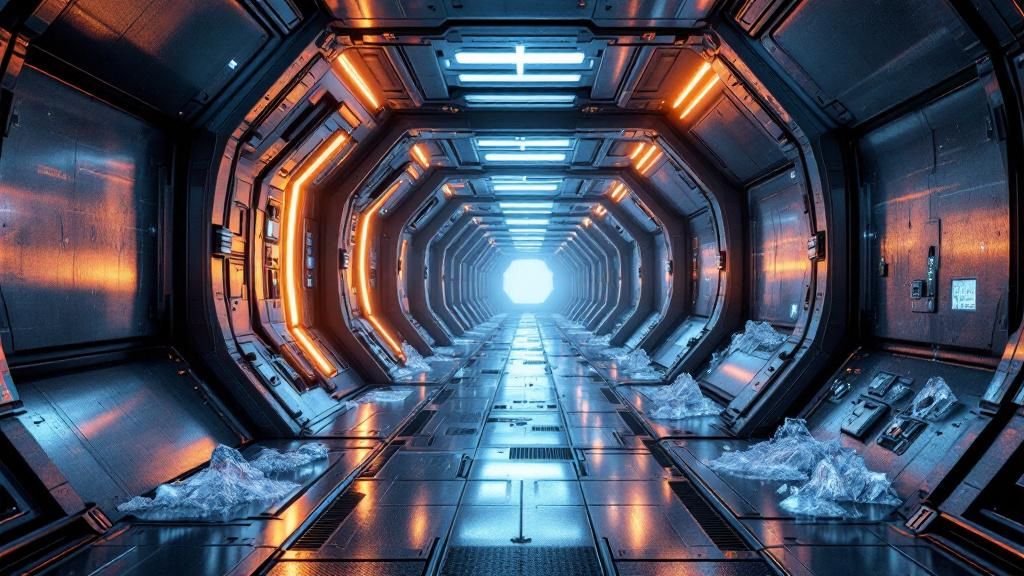
Supermassive Games has announced a extensive PlayStation 5 Pro upgrade for its narrative horror title Directive 8020, arriving on 12 May 2026. The upgrade utilises the console’s advanced hardware capabilities, encompassing PlayStation Spectral Super Resolution (PSSR), ray tracing, and dynamic shadow systems to enrich the narrative cinematic experience. The upgrade offers sharper visuals, more realistic lighting, and improved atmospheric richness throughout the deadly mission aboard the Cassiopeia as the crew works to endure an encounter with a shape-shifting alien organism. According to Will Burdon, Technical Director at Supermassive Games, the improvements deepen the tension and emotional impact that form the core of the game’s choice-driven narrative.
Cinematic Horror Reimagined for Modern Gaming Hardware
Directive 8020 was designed from the beginning as a narrative-driven cinematic journey, prioritising atmospheric storytelling and meaningful player choice above all else. The PlayStation 5 Pro upgrade allows Supermassive Games to realise this vision with remarkable visual precision, displaying each scene with greater detail that reinforces the emotional weight of key moments. Character portrayals, facial expressions, and environmental narrative now gain from the console’s extra processing capability, establishing a deeper immersive state where subtle visual details are vital to the story. When players need to choose whom to trust—particularly when confronted with identical faces—these subtle improvements in character presentation become crucial to the horror atmosphere.
Lighting has long been one of the most potent horror storytelling tools, and the PS5 Pro improvements intensify this dramatically. Advanced ray tracing enables light to exhibit physical accuracy, bouncing naturally through metal passageways and bouncing across surfaces with genuine realism. Warning lights illuminate bulkheads whilst flames dance across faces, creating dynamic shadows that move erratically throughout environments. This heightened visual authenticity transforms the Cassiopeia from a fixed setting into a living, breathing space where danger lurks in every shadow, heightening the unease throughout the whole gameplay.
- Ray tracing produces realistic lighting and shadow behaviour throughout corridors
- PSSR technology enhances environmental details and character model sharpness
- Dynamic shadows introduce depth, motion, and variability to scenes
- Enhanced facial animations amplify emotional resonance during key story moments
Aesthetic Improvements Creating Immersive Dread
AI-Powered Precision Through PSSR Technology
PlayStation Spectral Super Resolution (PSSR) marks a significant leap forward in image quality for Directive 8020. Sony’s artificial intelligence-powered enhancement technology intelligently enhances image detail and clarity on a individual frame approach, transforming how players experience the Cassiopeia and its hostile environment. The metal hallways now gleam with crisp definition, whilst environmental details that tell the story of the ship’s desperate situation emerge with newfound sharpness. Character models gain similarly from this improvement, permitting nuanced facial features and subtleties to register with greater precision.
The frost accumulating on the medical laboratory’s surfaces and the distortion visible through reflective visors exemplify how PSSR enhances the game’s visual language. These environmental details, though appearing insignificant, contribute substantially to the engrossing horror setting Supermassive Games has crafted. By refining visual clarity throughout each scene, PSSR ensures that players take in all carefully constructed detail, strengthening their bond to the narrative and heightening their sense of vulnerability aboard the doomed vessel.
Advanced Ray Tracing and Dynamic Lighting
Advanced ray tracing fundamentally transforms how light behaves within Directive 8020’s environments. Light now reflects organically through hallways and reflects authentically off steel surfaces, producing an impression of physical plausibility that grounds the terrifying atmosphere. Emergency strobes shine genuinely against panels, casting intense, wavering shadows that perplex and trouble. Firelight moves fluidly across character faces, whilst ice bends light in manners that seem genuinely cold and harsh, emphasising the dangers posed by the environment beyond the creature danger itself.
This authentic lighting behaviour fulfils a essential narrative function within the game’s tension-building system. By establishing lighting that feels grounded in physical reality, players cultivate an intuitive understanding of their environment, making the mysterious hazards lurking in shadow all the increasingly menacing. The dynamic between illuminated spaces and shadow generates constant visual uncertainty, ensuring that no passageway feels entirely safe or intelligible, perpetually fuelling the atmospheric dread that defines the experience.
Shadow Detail as Narrative Tool
Shadows serve as far more than mere visual decoration in Directive 8020; they represent a core vocabulary of fear woven throughout the experience. Detailed dynamic shadows contributes unparalleled dimensionality and dynamism to scenes, transforming static environments into volatile environments where danger could emerge at any moment. A moving shadow form might be nothing—or it might be the alien hunter watching from the darkness. This improved shadow detail generates subtle but profoundly powerful environmental enhancement, intensifying the omnipresent dread that marks every moment aboard the Cassiopeia.
Efficiency and Quick Response in Critical Moments
In a story-driven journey where every decision carries weight and repercussions echo across the story, frame rate consistency proves essential to the gameplay experience. The PlayStation 5 Pro upgrade ensures that Directive 8020 maintains consistently smooth frame rates during the peak action sequences, ensuring no technical glitch from breaking immersion during critical story choices. Whether navigating the claustrophobic corridors of the Cassiopeia or facing the shape-shifting extraterrestrial danger, players can rely on responsive controls and fluid visuals that never falter when tension peaks, allowing them to focus entirely on the story decisions that determine their fate.
This enhanced frame stability proves especially beneficial during moments needing rapid-fire decisions or instances when player decisions significantly transforms the plot’s course. The upgraded hardware removes frame rate dips that might otherwise distract from spoken exchanges, setting narratives, or the growing tension of pursuit. By ensuring unwavering technical performance, the PS5 Pro upgrade ensures that every pivotal decision appears cinematic and consequential, with no performance compromise undermining the emotional resonance of the storytelling experience or the player agency within the developing story.
- Steady frame rates preserve immersion during high-tension decision sequences
- Responsive controls guarantee exact player input during key story moments
- Stable performance avoids technical interruptions from story engagement
DualSense Integration and Engaging Play Experience
The PlayStation 5 Pro improvement surpasses display upgrades to maximise the DualSense controller’s sophisticated haptic technology and responsive trigger mechanics. These sensory components convert Directive 8020 into a deeply engaging experience, letting users to experience the stress and threat within the Cassiopeia. Every sound reverberating down steel hallways, every rhythm in suspenseful sequences, and every interaction with the environment translates into precise haptic vibrations that dissolve the boundary from display to controller, strengthening emotional connection in the story.
The adaptive triggers add another layer of immersion, delivering contextual resistance that reflects the physical actions players undertake within the game world. Pulling a door handle demands progressive resistance, whilst using implements or armaments generates responsive haptics that shifts based on setting factors and narrative events. This sophisticated input design confirms that pivotal decisions feel tangible and consequential, with the DualSense functioning as an extension of the player’s agency rather than merely a peripheral device, significantly deepening how gamers engage with their struggle within the condemned ship.
| Feature | Immersive Effect |
|---|---|
| Haptic Feedback Vibrations | Players physically feel environmental dangers and character emotions through precise controller vibrations |
| Adaptive Trigger Resistance | Contextual pressure feedback mirrors in-game actions, making interactions feel authentically grounded |
| Heartbeat Simulation | Rhythmic haptic pulses synchronise with character anxiety, amplifying psychological tension during critical moments |
| Environmental Tactile Cues | Dynamic feedback responds to surroundings, alerting players to nearby threats through subtle controller sensations |
Through this refined DualSense integration, Supermassive Games transforms Directive 8020 into a multisensory experience where visual storytelling, audio design, and physical sensations work in harmony. Players no longer merely witness the crew’s fight to survive—they viscerally experience it, with every haptic vibration intensifying the mounting dread and urgency that shapes their trek across the cold expanse of space.
The Cassiopeia Awaits
Directive 8020 carries players onto the ill-fated Cassiopeia, a spacecraft bound for Tau Ceti f on a mission that quickly evolves into a desperate struggle for survival. The vessel acts as more than mere backdrop—it’s a character of its own, with every corridor, laboratory, and observation deck precisely constructed to amplify the mental anguish of being pursued in the infinite void of space. The PlayStation 5 Pro upgrades breathe new life into these restricted areas, displaying the ship’s metal exterior with remarkable detail and authenticity that makes the tight quarters feel truly threatening.
The crew’s predicament deepens when an extraterrestrial entity capable of perfectly mimicking its victims infiltrates the Cassiopeia, forcing players to challenge every interaction and partnership. With advanced ray tracing technology projecting realistic shadows through passageways and adaptive lighting generating unpredictable visual landscapes, unease fills every second aboard the doomed vessel. The upgraded visuals guarantee that minor environmental cues—ice forming on windows, distortions in visors, the flicker of emergency lights—serve as crucial storytelling elements that intensify fear and unease throughout this cinematic story experience.
