
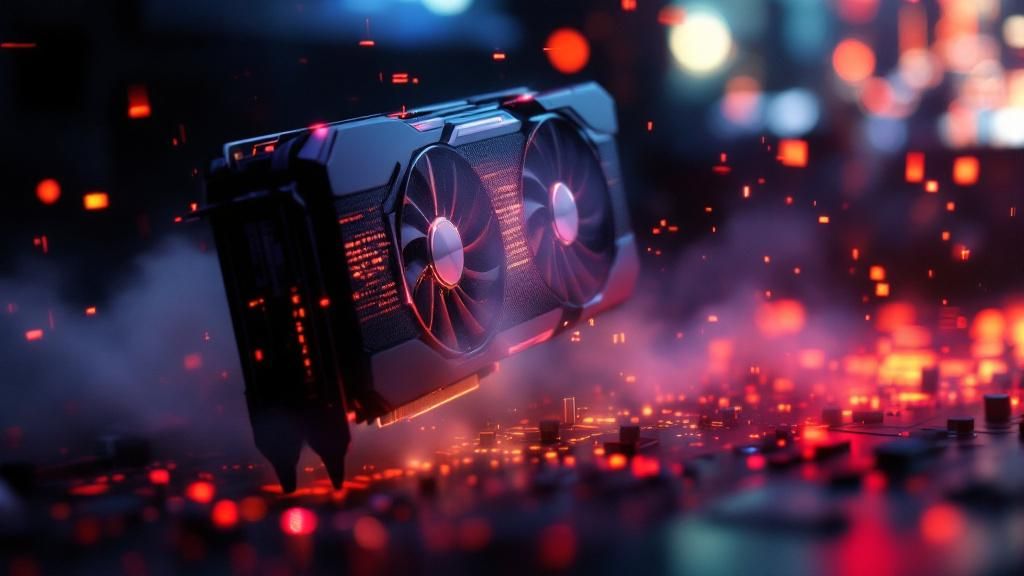
The gaming sector is going through a fundamental change as cutting-edge graphics card technology demolishes performance thresholds once considered impossible. For serious enthusiasts requiring extremely high frame rates and exceptional image quality, this advancement constitutes a pivotal milestone. This article investigates the innovative architecture and engineering prowess behind these new-generation processors, examining how they deliver extraordinary performance gains that redefine what’s possible in contemporary gaming. Learn what establishes these cards as necessary for enthusiasts pursuing the finest gaming setup.
Innovative Design Framework and Fundamental Improvements
The current generation of graphics cards presents a completely redesigned architecture that maximises computational efficiency whilst lowering power demands. Engineers have deployed advanced manufacturing processes that permit substantially increased transistor densities, allowing for increased core counts and enhanced memory bandwidth. These structural improvements enable concurrent execution of intricate rendering workloads with remarkable performance, directly translating to frame rates that were formerly unreachable at peak visual configurations. The optimised architectural approach focuses on temperature regulation and energy efficiency, ensuring reliable functionality during prolonged play periods without significant thermal output or power draw.
Core upgrades go further than raw processing power, including intelligent caching systems and refined command structures specifically tailored for modern gaming workloads. The improved memory structure significantly lowers latency, enabling faster information access and processing across intensive graphics processing. Manufacturers have further incorporated specialised processing units designed for ray tracing and artificial intelligence acceleration, optimising these resource-heavy features. These cumulative improvements work synergistically to generate performance boosts that surpass the total of their separate elements, setting a updated performance threshold that demands recognition from dedicated gaming enthusiasts worldwide.
Performance Benchmarks and Actual Gaming Results
Third-party laboratories have performed comprehensive performance testing of the newest GPU lineup, revealing remarkable performance improvements across the board. In demanding titles such as Cyberpunk 2077 and Alan Wake 2, the latest design demonstrates frame rate increases exceeding 40 per cent compared to the prior generation. These results demonstrate that the technical improvements deliver concrete performance gains for gamers seeking better performance at highest graphics quality and greater resolution support.
Real-world gaming scenarios further substantiate the benchmark findings, with players reporting exceptionally smooth gameplay at 4K resolution with ray tracing set to maximum. Frame rates consistently remain above 100 fps in competitive titles, whilst maintaining visual fidelity at the maximum quality settings. The improved memory bandwidth and optimised rendering pipeline guarantee that these performance gains remain stable during lengthy play sessions, delivering the dependability and stability that selective enthusiasts demand from high-end hardware purchases.
High-Performance Cooling Systems and Energy Efficiency
Modern graphics cards generate considerable thermal energy during demanding gameplay periods, necessitating sophisticated cooling mechanisms. Manufacturers have developed innovative thermal solutions featuring several heat conduits, sophisticated fin configurations, and high-quality thermal pastes that efficiently dissipate heat away from critical components. These advancements ensure ideal thermal conditions, extending graphics card lifespan whilst maintaining consistent performance. Liquid cooling options are now accessible to enthusiasts pursuing superior heat control, offering superior heat dissipation compared to conventional air cooling solutions.
Power efficiency has grown essential in next-generation graphics card design, reconciling raw performance with responsible power usage. These cards incorporate advanced power management infrastructure and intelligent voltage regulation to minimise wasteful energy loss. Adaptive power management systems automatically adjust clock speeds and voltage according to processing requirements, reducing electricity consumption during lighter workloads. This thoughtful engineering approach not only reduces running expenses for gamers but also reduces ecological footprint, making high-performance gaming more sustainable than ever before.
Protecting Your Gaming System
Investing in the latest graphics card technology ensures your gaming rig stays competitive for many years ahead. Contemporary GPUs are designed with forward compatibility in mind, supporting new protocols and APIs that studios will implement throughout the next generation of games. By choosing a card with substantial VRAM and advanced architecture, you’re essentially investing in durability alongside performance. These cards handle current resource-intensive games with ease whilst remaining capable of handling future visually demanding games without needing immediate replacement.
Consider your gaming needs when selecting hardware, as this determines the right investment level. Enthusiasts chasing 4K gaming at maximum settings require more powerful specifications than those content with 1440p performance. The advantage of current-generation cards lies in their scalability—they smoothly support both present-day requirements and anticipated future demands. Coupling a high-quality graphics card with proper power supply and thermal management creates a foundation capable of supporting technological advancements for several years, ultimately providing outstanding value and gaming satisfaction.
